
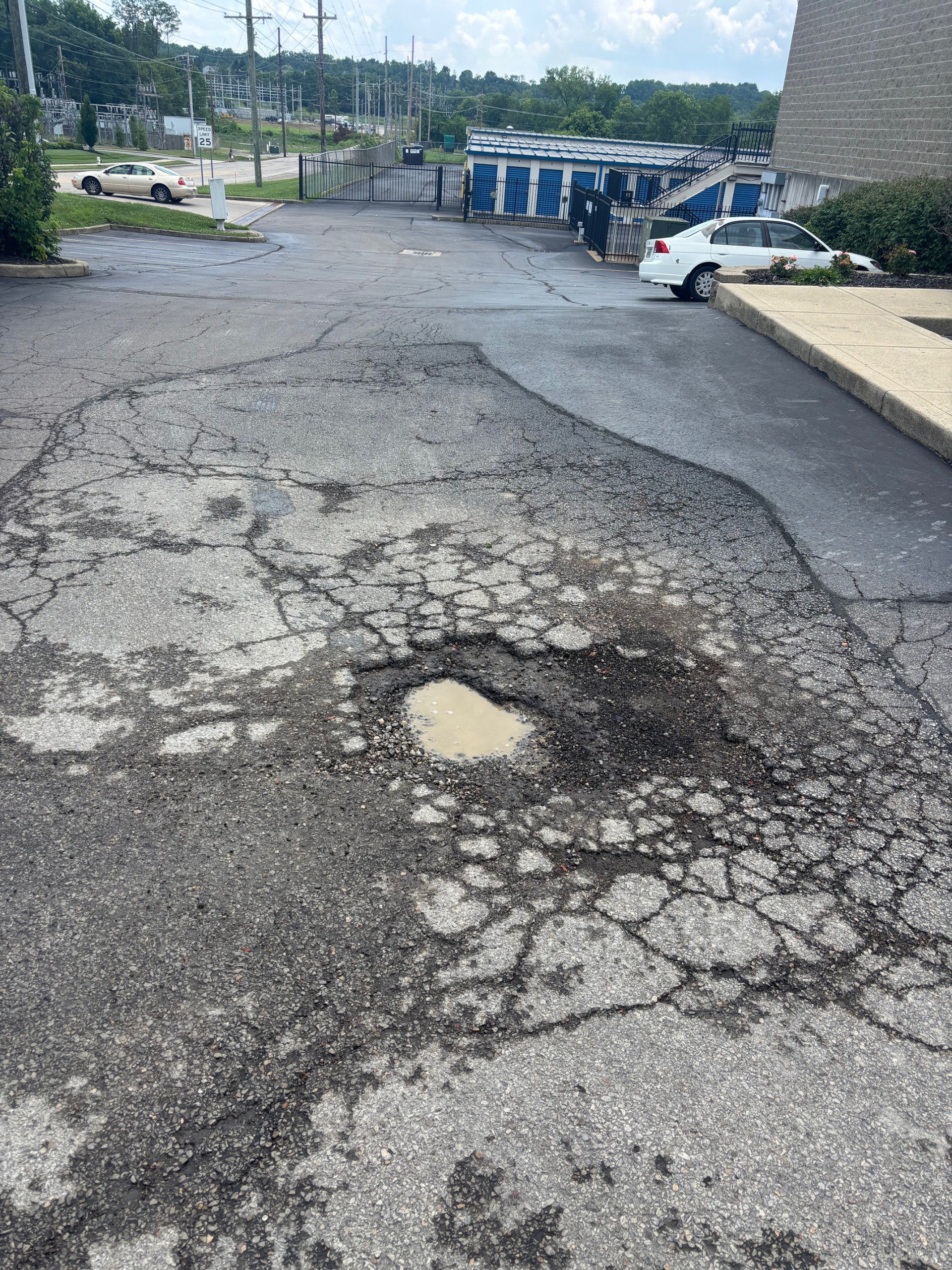
Cincinnati’s Climate Is Hard on Asphalt
If you live in the Greater Cincinnati area, you know our weather does not do things halfway. Summer temperatures push into the 90s. Winter regularly drops below freezing. And the transitions between those extremes happen frequently and abruptly — sometimes within the same week.
This constant temperature fluctuation is the single biggest threat to asphalt driveways and parking lots in Hamilton, Warren, and Clermont counties. The mechanism responsible is called the freeze-thaw cycle, and understanding how it works is the first step toward protecting your pavement investment.
How Freeze-Thaw Cycles Destroy Asphalt
The process is straightforward but relentless:
Step 1: Water enters the surface. Rain, snowmelt, and humidity deposit water on your asphalt. If any cracks, pores, or openings exist in the surface — even microscopic ones — water works its way into and beneath the pavement.
Step 2: Temperature drops below freezing. When that water freezes, it expands by approximately nine percent. Inside a crack, this expansion generates enormous pressure against the asphalt walls. The crack is physically forced wider.
Step 3: Temperature rises above freezing. The ice melts. Water now occupies the newly widened space, and more water flows in to fill the expanded crack.
Step 4: The cycle repeats. Every freeze-thaw event forces the crack wider. In a typical Cincinnati winter, this cycle can repeat dozens of times between November and March.
After just one winter of repeated cycling, a hairline crack can become a visible fracture. After two or three winters without repair, that fracture can become a network of interconnected cracks. After that, base layer damage begins, and the cost of repair increases dramatically.
Why Cincinnati Is Particularly Vulnerable
Not every region experiences freeze-thaw damage equally. Cincinnati sits in a climate zone that is especially prone to this type of pavement deterioration for several reasons:
Frequent Temperature Crossings
Cities that stay frozen all winter or never freeze at all do not experience the same damage. Cincinnati’s temperatures regularly cross the 32-degree threshold — sometimes multiple times in a single week. Each crossing is one cycle of expansion and contraction. More crossings mean more damage.
According to weather data, the Cincinnati area typically experiences between 80 and 100 freeze-thaw cycles per winter season. That is 80 to 100 events where water in your pavement is expanding and contracting.
Abundant Moisture
Ohio is not a dry state. Cincinnati averages about 42 inches of precipitation per year, spread across all four seasons. This means there is almost always moisture available to enter cracks and begin the freeze-thaw process. Unlike arid climates where dry conditions limit water infiltration, Cincinnati’s pavement is dealing with water year-round.
Deicing Chemical Exposure
Road salt and chemical deicers are a necessary part of winter in Greater Cincinnati. While they keep surfaces safe for driving, they also accelerate asphalt deterioration. Salt attracts and retains moisture on the pavement surface, increasing the amount of water available to infiltrate cracks. Some chemical deicers can also break down the asphalt binder directly, compounding the damage from freeze-thaw cycling.
The Stages of Freeze-Thaw Damage
Understanding the progression helps you identify where your pavement stands and what action is needed:
Stage 1: Surface Oxidation
Before cracks even form, the asphalt surface begins to dry out and oxidize. You see this as a color change from dark black to gray. The surface becomes slightly rougher and more porous. At this stage, sealcoating provides excellent protection by restoring a waterproof barrier over the surface.
Stage 2: Hairline Cracking
Small, narrow cracks appear on the surface. These may look insignificant, but each one is an entry point for water. If these cracks are sealed promptly, the freeze-thaw cycle cannot gain a foothold. This is the most cost-effective point for intervention.
Stage 3: Crack Network Formation
When hairline cracks go unaddressed, they widen and branch. A single crack becomes a network of interconnected fractures. Water is now entering the pavement through multiple points, and the surface between cracks begins to weaken.
Stage 4: Alligator Cracking
The surface develops a pattern that resembles reptile skin — small, interconnected polygonal pieces. This indicates that the base layer beneath the surface has been compromised. Water has been saturating the foundation material, and it is beginning to fail. At this stage, surface treatments alone are not enough. The damaged section typically needs to be cut out and rebuilt from the base.
Stage 5: Pothole Formation
Failed base material shifts under traffic load, and chunks of surface asphalt break free, leaving depressions in the pavement. Potholes accelerate surrounding damage because they collect water, expose the base to direct traffic impact, and create stress concentrations in adjacent pavement.
Stage 6: Structural Failure
Large areas of the pavement have lost structural integrity. The base has failed over an extended section. Patching individual potholes no longer solves the problem because the entire area is compromised. Full resurfacing or replacement is typically required.
Prevention Strategies That Work
The good news is that freeze-thaw damage is highly preventable. The key is maintaining the waterproof barrier on your asphalt surface so water never gets the chance to enter and begin the cycle.
Regular Sealcoating
Sealcoating creates a waterproof surface layer that blocks moisture penetration. For Cincinnati properties, we recommend sealcoating every two to three years. This maintains the protective barrier and prevents water from reaching the asphalt structure.
Prompt Crack Sealing
Every crack is a potential entry point for water. Sealing cracks as soon as they appear — rather than waiting until they multiply — eliminates the starting points for freeze-thaw damage. Annual crack inspections in spring (after winter damage is visible) and fall (before the next freeze season) are ideal timing.
Proper Drainage
Water that sits on your pavement has more time and more opportunity to infiltrate cracks. Ensuring that your driveway or parking lot drains properly — water flows away from the surface rather than pooling on it — reduces the amount of moisture available for freeze-thaw cycling.
Base Layer Protection
For new installations or major repairs, proper base preparation and adequate drainage layers below the surface prevent water from saturating the foundation. While this is more of a construction consideration than a maintenance one, it significantly affects long-term freeze-thaw resistance.
What to Do After Winter
Spring is the most important time for pavement evaluation in the Cincinnati area. Winter’s freeze-thaw cycles have done their work, and any new damage is now visible.
Here is a spring pavement checklist:
- Walk the entire surface and note any new cracks, widened existing cracks, or pothole formation
- Check edges and borders for crumbling or separation from adjacent surfaces
- Look for drainage issues — areas where water pools after spring rains indicate settlement or drainage failure
- Compare to last year — is the damage level accelerating? If damage is significantly worse than the previous spring, your pavement may be reaching a tipping point
- Schedule a professional evaluation to assess conditions and recommend the appropriate maintenance or repair plan
The Cost Comparison
To put prevention in perspective, here are approximate relative costs for different levels of intervention:
- Sealcoating a residential driveway costs a fraction of what crack repair and patching cost
- Crack sealing a small network of cracks costs a fraction of what pothole repair costs
- Pothole patching costs a fraction of what section replacement costs
- Section replacement costs a fraction of what full resurfacing costs
At every stage, acting sooner is dramatically less expensive than waiting. The homeowners and property managers who spend the least on pavement over their lifetime are those who invest in prevention before damage begins.
Protect Your Pavement Before Next Winter
If your driveway or parking lot made it through this past winter with new cracks, widened damage, or emerging potholes, now is the time to act. Addressing the damage before next winter’s freeze-thaw cycles begin prevents it from compounding.
Schedule a free evaluation with Dr. Sealcoat by calling (513) 470-3821 or requesting an estimate online. We serve homeowners and commercial property owners throughout Cincinnati, Mason, West Chester, Lebanon, Milford, Loveland, Anderson Township, Blue Ash, Colerain, Batavia, and surrounding communities in Hamilton, Warren, and Clermont counties.