
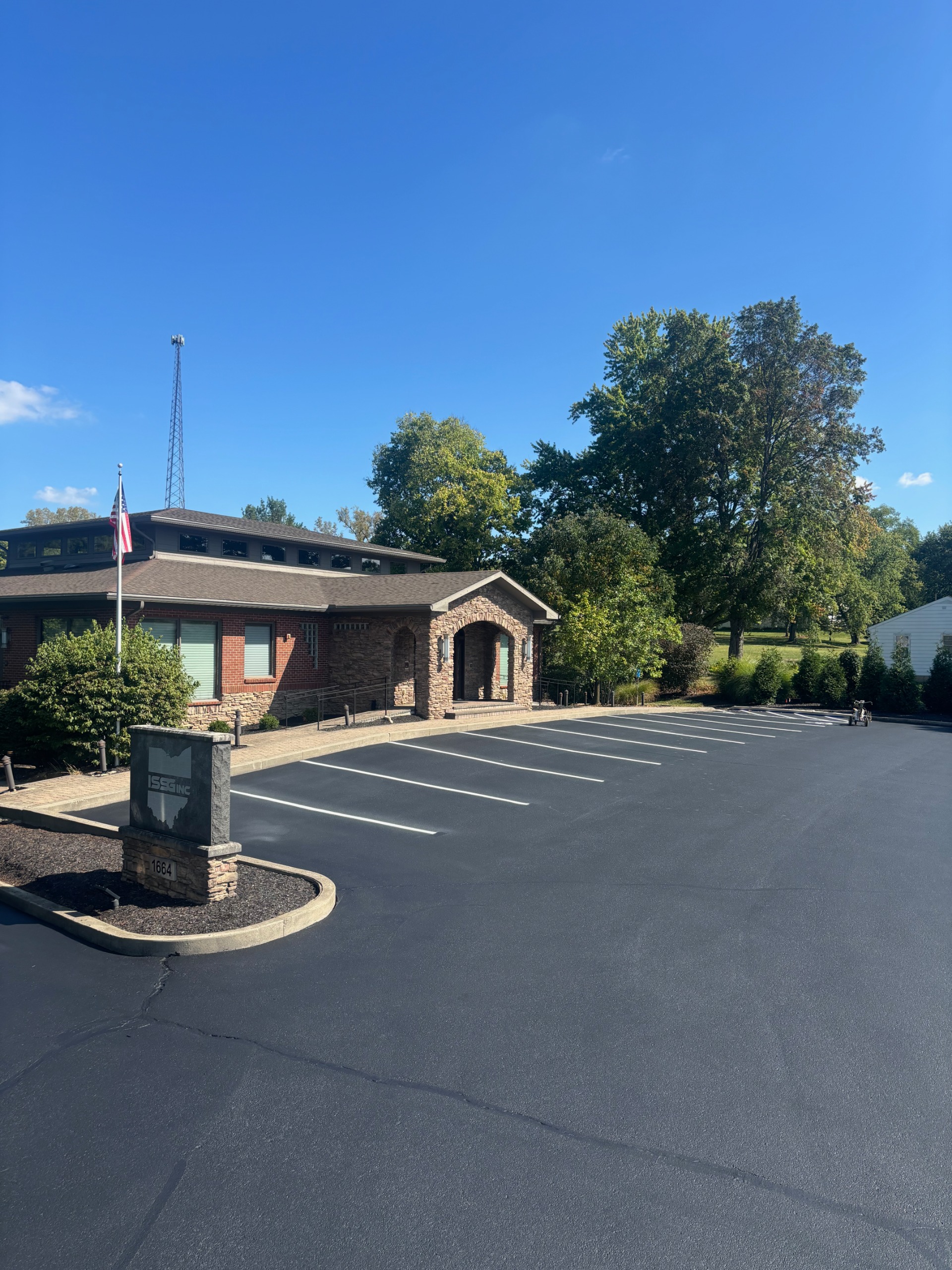
Your Parking Lot Is Quietly Getting Expensive
If you own or manage a commercial property in Greater Cincinnati, your parking lot is one of your largest maintenance expenses — but only if you wait until problems become emergencies. The businesses and property managers we work with across Hamilton, Warren, and Clermont counties consistently tell us the same thing: they wish they had started maintenance earlier.
The difference between a parking lot that lasts 25 years and one that needs replacement after 12 comes down to avoiding a handful of common mistakes. Here are the five we see most often, along with what to do instead.
Mistake 1: Ignoring Small Cracks
This is the most common and most expensive mistake we encounter. A hairline crack appears on the surface. It is barely visible, certainly not something a customer would notice. So it gets ignored.
Six months later, that crack has widened. Water has been entering with every rain, and Cincinnati’s freeze-thaw cycles have expanded the crack with each temperature swing. A year later, the crack is part of a network. Two years later, the area around it is showing alligator cracking — the telltale pattern that indicates base layer failure.
What a small crack costs to fix: A few dollars per linear foot for crack sealing.
What ignoring it costs: Hundreds to thousands per area for cut-and-patch repair, or tens of thousands for resurfacing.
The fix: Schedule annual crack sealing inspections. Seal every crack as soon as it appears. This single habit prevents more pavement damage than any other maintenance activity.
Mistake 2: Skipping Sealcoating Cycles
Sealcoating is the primary defense against oxidation, water penetration, and chemical damage. It creates a sacrificial layer that takes the abuse instead of your asphalt. When you skip scheduled sealcoating, you remove that protective barrier and expose the asphalt directly to the elements.
We regularly evaluate parking lots that were last sealcoated five, seven, or even ten years ago. The surface is faded gray, covered in branching cracks, and starting to crumble at the edges. The owner is now facing a repair bill that would have been avoided with consistent maintenance.
Recommended cycle: Every two to three years for most commercial properties in the Cincinnati area. High-traffic lots may benefit from more frequent applications.
The math: Sealcoating a typical commercial lot costs a fraction of resurfacing. Over the life of the pavement, consistent sealcoating can save tens of thousands in avoided repairs and deferred replacement.
Mistake 3: Letting Striping Fade Until It Disappears
Faded parking lot lines might seem like a cosmetic issue, but the consequences are practical and legal:
- Customer confusion leads to poor parking, wasted spaces, and traffic conflicts
- ADA violations from invisible handicap markings can result in fines and legal liability
- Emergency access is compromised when fire lanes are no longer visible
- Liability exposure increases when unclear markings contribute to accidents
Property managers sometimes delay re-striping to save money, but the risk far outweighs the cost. ADA compliance alone makes this one non-negotiable.
When to re-stripe: After every sealcoating application (the new coating covers existing lines), when lines become difficult to see from a driver’s seat, when any ADA markings are faded, and whenever layout changes are needed.
Mistake 4: Using the Wrong Repair Methods
Not all asphalt damage is the same, and not all repairs are interchangeable. We regularly see the aftermath of incorrect repair approaches:
- Cold patch dumped into a pothole without removing failed material or compacting properly. These “repairs” wash out within months.
- Sealcoating applied over unrepaired cracks in hopes that the coating will fill them. Sealcoat is a surface protectant, not a structural repair. The cracks return quickly, now with sealcoat peeling off around them.
- Crack filler smeared over alligator cracking instead of addressing the base failure underneath. The surface continues to deteriorate because the root cause was never addressed.
The right approach: Match the repair method to the damage type. Surface cracks get sealed. Potholes get cut, excavated, re-based, and filled with hot-mix asphalt. Alligator cracking requires removing the failed section and rebuilding from the base up. Sealcoating goes on last, after all repairs have cured.
Mistake 5: No Drainage Management
Water is the primary destroyer of asphalt. When water sits on or under the pavement surface, damage accelerates dramatically. Yet many commercial property owners never consider drainage as part of their parking lot maintenance.
Signs of drainage problems include:
- Puddles that remain hours after rain in the same locations every time
- Water flowing across the surface instead of toward drains or lot edges
- Soil erosion at pavement edges where water is undermining the base
- Repeated failures in specific areas that seem to need patching every year
If you are repairing the same areas repeatedly, the problem is not the asphalt — it is the water. Addressing drainage issues before they destroy the pavement base saves significant money over time.
What to do: During your next pavement evaluation, ask specifically about drainage conditions. Look for areas where water pools, where the surface has settled, or where edge damage suggests water is undermining the base. Addressing drainage before it causes structural failure is far less expensive than repairing the damage afterward.
The Common Thread: Timing
All five of these mistakes share a root cause — delayed action. Asphalt maintenance is dramatically less expensive when done proactively. Every month of delay allows damage to compound, and the repair cost increases disproportionately.
The property managers who spend the least on pavement over time are the ones who:
- Seal cracks as soon as they appear
- Sealcoat on a consistent two-to-three-year cycle
- Re-stripe whenever markings fade
- Use the correct repair method for each type of damage
- Address drainage issues before they destroy the base
What To Do Next
If you manage commercial property in Greater Cincinnati and your parking lot has not been evaluated recently, now is the time. A professional assessment identifies current conditions, prioritizes what needs immediate attention, and gives you a maintenance plan to prevent future expenses.
Schedule a free evaluation with Dr. Sealcoat by calling (513) 470-3821 or requesting an estimate online. We serve commercial properties throughout Cincinnati, Mason, West Chester, Lebanon, Blue Ash, Anderson Township, and surrounding communities in Hamilton, Warren, and Clermont counties.